Congress Deadlocked as 'National AI Bill of Rights'
Progressives and libertarians form unlikely alliance, while centrists and traditionalists clash over data privacy, automation, and AI oversight.
/
April 26, 2026
 3 min read
 Story Type:
Opinion
Story Type:
Opinion
 Accuracy:
80%
Accuracy:
80%
Sentiment:
Right
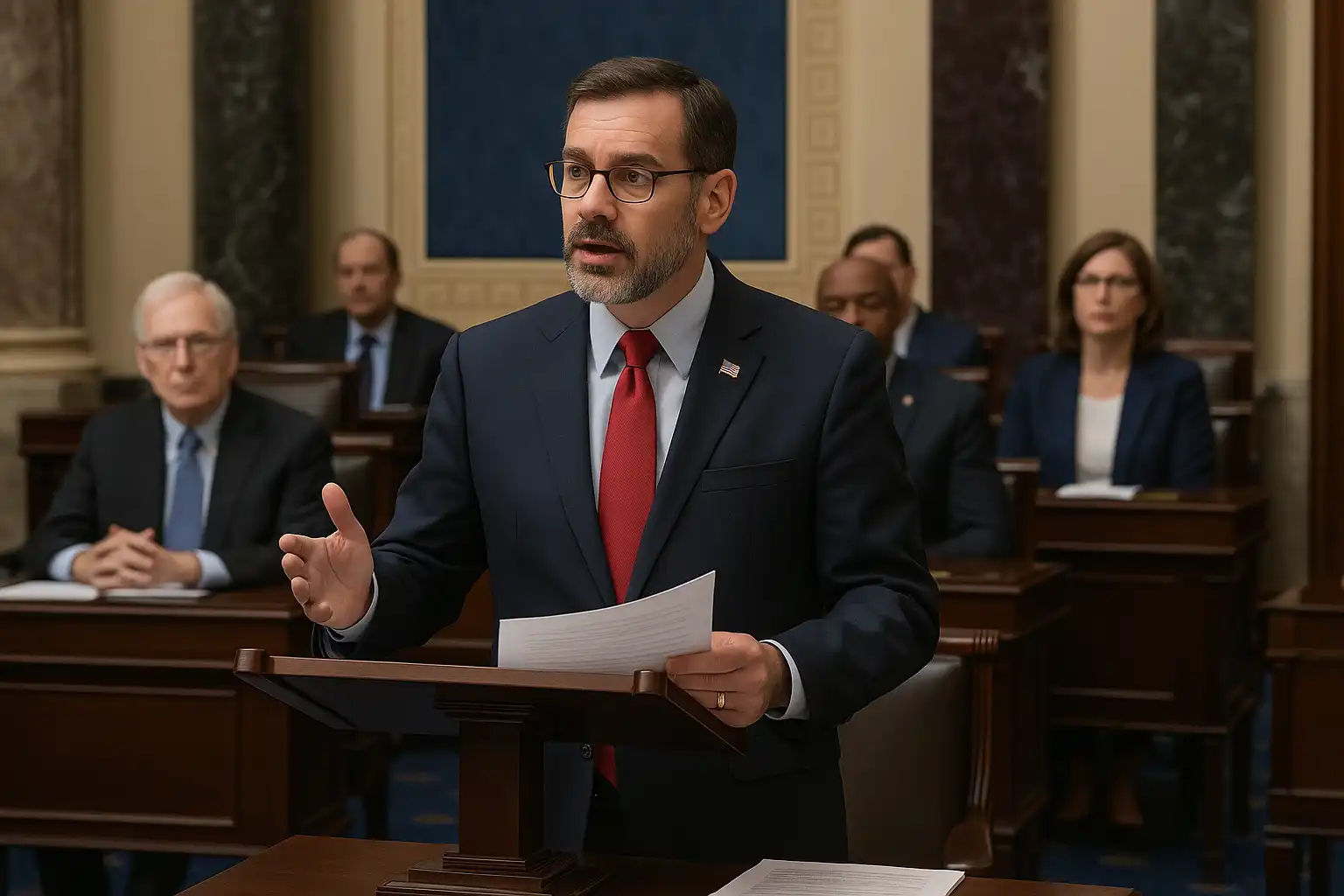
WASHINGTON, D.C. — In a dramatic scene on Capitol Hill today, Congress ended in a stalemate over the much-debated National AI Bill of Rights, halting forward momentum just days before the legislative session ends. The bill, designed to regulate AI applications across sectors—from hiring algorithms to consumer-facing chatbots—revealed an unexpected political realignment: centrist Republicans joined moderate Democrats in blocking the legislation.
The proposed law aims to establish rights around algorithmic transparency, automated decision appeals, and ethical oversight by newly created regional AI commissions. Original sponsors—including Representatives Maya Singh (D-CA) and Austin Reed (R-NC)—argued it bridges partisan concerns between innovation and accountability.
However, centrist Republicans cited fears of over-regulation stifling startups, while moderate Democrats argued the bill didn’t go far enough on data privacy and equity. "This is a half-measure dressed as progress," said Rep. Leila Brooks (D-MA). On the other side, Rep. Marco Salazar (R-TX) warned it would hamstring small businesses navigating emerging technologies.
The final vote ended 213–213 in the House, with Senate prospects equally uncertain. Observers say this split reflects deeper ideological fractures over how aggressively America should regulate AI—and who gets to decide.
Advocacy groups from both Silicon Valley and the ACLU expressed disappointment. Without compromise wording, the bill may stall beyond August, leaving federal AI oversight in limbo—and a divided Congress with no clear path ahead.
Sources
- National Archives: Blueprint for an AI Bill of Rights
- Brookings: Unpacking the White House blueprint for an AI Bill of Rights
- IBM: What is the AI Bill of Rights?
Related Stories


What's for dinner?

Scoreboard
Final
 Poudre
21
Poudre
21
 Wellington
24
Wellington
24
 Limon
7
Limon
7
 Yuma
17
Yuma
17
Upcoming
Wellington
 Fort Collins
 Fossil Ridge
Poudre
Fossil Ridge
Poudre
Tickets On Sale Now

Wellington Archive

Local Business

Upcoming Events

Comments